REVIEW · ROTORUA
Te Puia: Te Rā Guided Day Tour
Book on GetYourGuide →Operated by Te Puia · Bookable on GetYourGuide
Geysers and Māori carving in one hour? That’s the point of Te Rā. In just 90 minutes, you’ll move through Te Whakarewarewa Geothermal Valley, the New Zealand Māori Arts and Crafts Institute, and the Kiwi Conservation Centre at Te Puia.
I love the up-close geothermal action—especially the chance to watch the Pōhutu Geyser area. I also really like the cultural stop, where you see Māori arts taught at the wānanga level, including weaving plus wood, stone, and bone carving.
One thing to plan for: it’s a compact tour. If you want extra time to linger for photos in the thermal zone or to read every panel in the arts school, the schedule can feel a bit rushed.
In This Review
- Te Rā at Te Puia: key highlights that matter
- Why this 90-minute Te Puia tour works so well
- Timing and meeting point at Te Puia
- Te Whakarewarewa Geothermal Valley: geysers, mud pools, and where to look
- What you’re likely to notice first
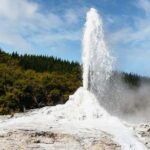
- The big moment: Pōhutu Geyser
- A drawback to watch for in the thermal zone
- New Zealand Māori Arts and Crafts Institute and Āhua Gallery: seeing skills in motion
- Why this arts stop feels more real than a quick craft shop
- Time trade-off
- Kiwi Conservation Centre: a kiwi encounter without the postcard fantasy
- How to make your kiwi moment easier
- The role of your kaiārahi (guide) and what good guidance changes
- A possible issue if your group is large
- Value math: what $59 buys you in Rotorua
- What’s included (and what you’ll need to sort yourself)
- Comfort and weather: how to not let Rotorua steam ruin your day
- Who should book Te Rā, and who should think twice
- Should you book Te Puia Te Rā guided day tour?
- FAQ
- How long is the Te Puia Te Rā guided day tour?
- Where is the meeting point, and when should I arrive?
- What’s included in the tour price?
- Is food and drinks included?
- Is this tour wheelchair accessible?
- What should I bring for the tour?
Te Rā at Te Puia: key highlights that matter
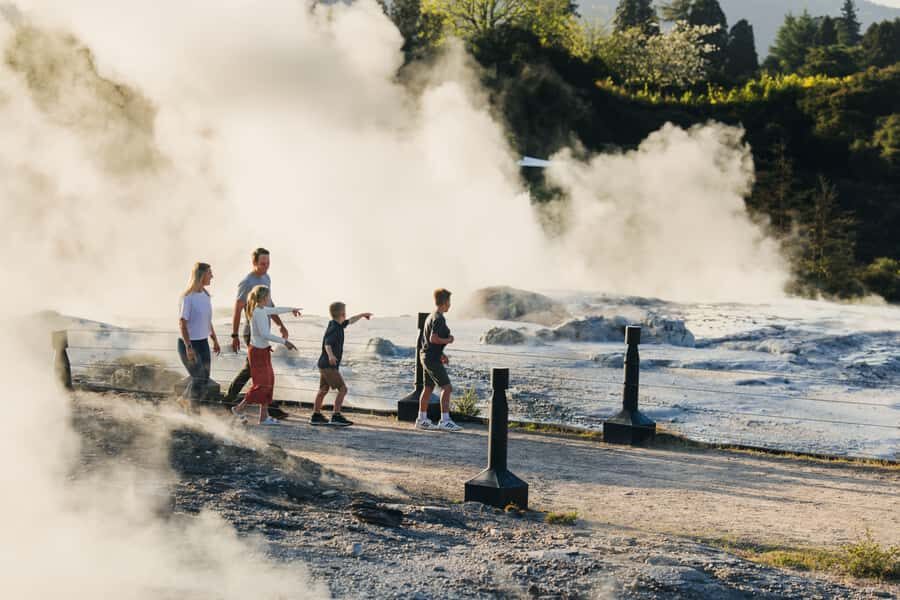
- Pōhutu Geyser viewing with a guided route that helps you know where to stand
- Te Whakarewarewa Geothermal Valley: geysers, bubbling mud, and native bush
- Māori Arts and Crafts Institute: watch skills in weaving and traditional carving
- Kiwi Conservation Centre: kiwi viewing in a specially designed nocturnal enclosure
- English live kaiārahi guidance that keeps the science and stories clear
Why this 90-minute Te Puia tour works so well
Rotorua can swallow a whole day fast. Te Puia’s Te Rā version is built for people who want the highlights without turning into a sprint. You get geothermal sights, cultural arts, and a kiwi encounter in one tight loop, starting and ending at Te Puia in Rotorua.
What makes it smart isn’t just what you’ll see. It’s the order and the pacing. A guided route helps you move through the thermal area efficiently, rather than wandering into spots where you can’t really see much. Then you shift gears to the Māori arts school, where you’re not only looking at art—you’re seeing where the skills are taught.
And the kiwi part has its own charm. Seeing a kiwi in the real world is one thing. Seeing it in a nocturnal-style enclosure is another, because it feels closer to how these birds live.
You can also read our reviews of more guided tours in Rotorua
Timing and meeting point at Te Puia
You’ll meet at Te Puia in Rotorua, and you should arrive 15 minutes early. The tour runs 90 minutes, and you can check available starting times when you book.
That 15-minute buffer matters more than you’d think. Te Puia is active—people arrive, paths are busy, and you’ll want a minute to get oriented and settle your shoes. Also, the tour is guided in English, so if you’re arriving mid-rush, you may miss the first instructions.
No hotel pickup or drop-off is included. So you’ll either need to walk over if you’re close, or arrange your own ride to Te Puia. For value, I like this setup: you’re not paying for a bus that still leaves you waiting.
Te Whakarewarewa Geothermal Valley: geysers, mud pools, and where to look
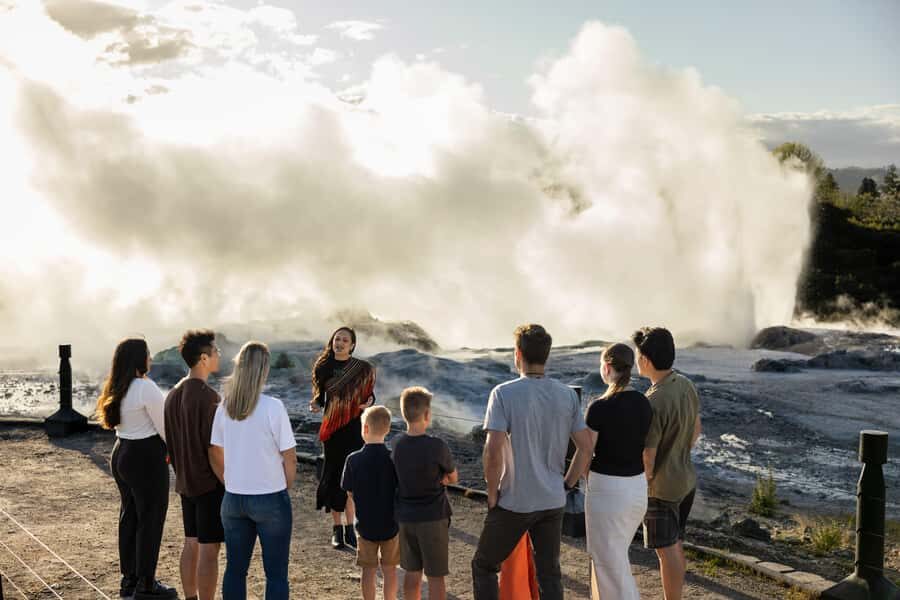
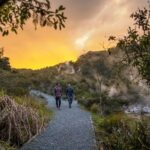
This is the heart of the experience. Te Whakarewarewa Geothermal Valley is all steam, bubbling ground, and nature that looks like it shouldn’t exist. During your guided time here, you’ll get a mix of thermal features: geysers, mud pools, and native bush.
What you’re likely to notice first
- The air smells like hot minerals.
- The ground is busy. Gently, then suddenly more intense.
- Visibility changes with weather—fog and steam can make the plume harder to read.
The big moment: Pōhutu Geyser
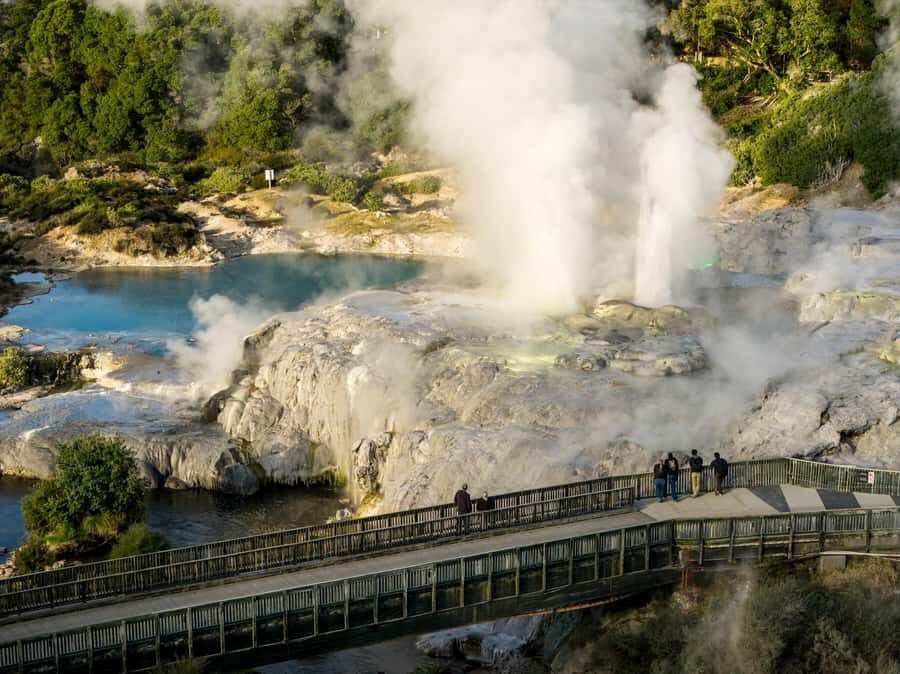
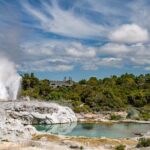
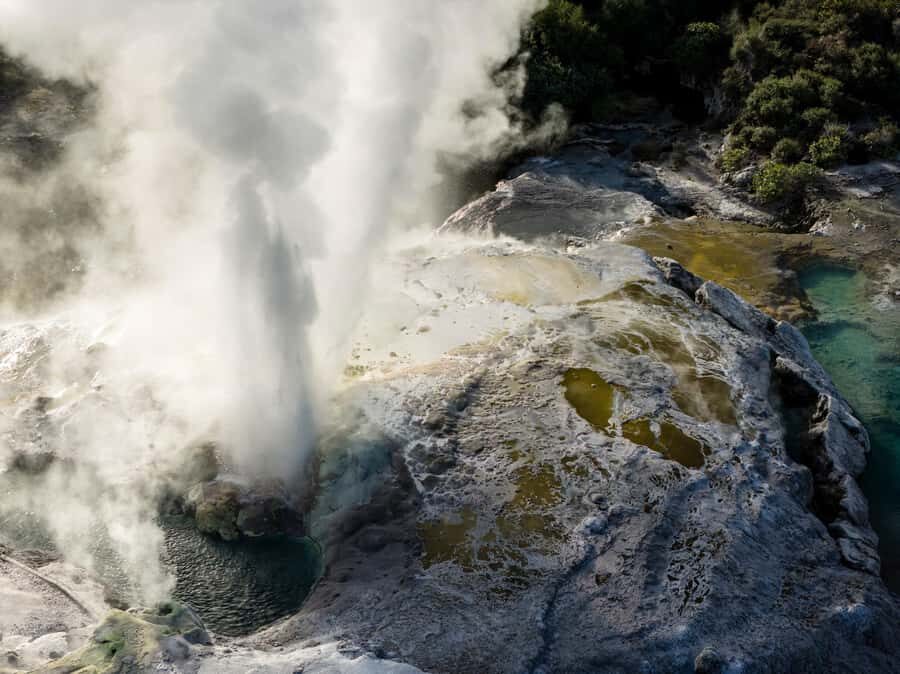
Your tour includes time around the Pōhutu Geyser, described as the largest active geyser in the southern hemisphere. In a place like this, “largest” isn’t just a brag. It usually means you’ll get a more dramatic eruption in terms of size and the amount of steam and water you can see from the viewing spots.
One practical tip: when the guide points out where to stand, take it seriously. The best view is often about positioning, not just luck. A couple of past groups also pointed out that weather can affect how crisp the plume looks. If it’s cold or wet, you might still see the eruption, but the steam can blur the shape.






A drawback to watch for in the thermal zone
The geothermal area can be visually intense but not always comfortable. Your route may include standing and walking on uneven ground near hot surfaces. That’s why comfortable shoes are non-negotiable. Also, if you’re sensitive to smells or heat, give yourself a moment to adjust after a few minutes.
New Zealand Māori Arts and Crafts Institute and Āhua Gallery: seeing skills in motion
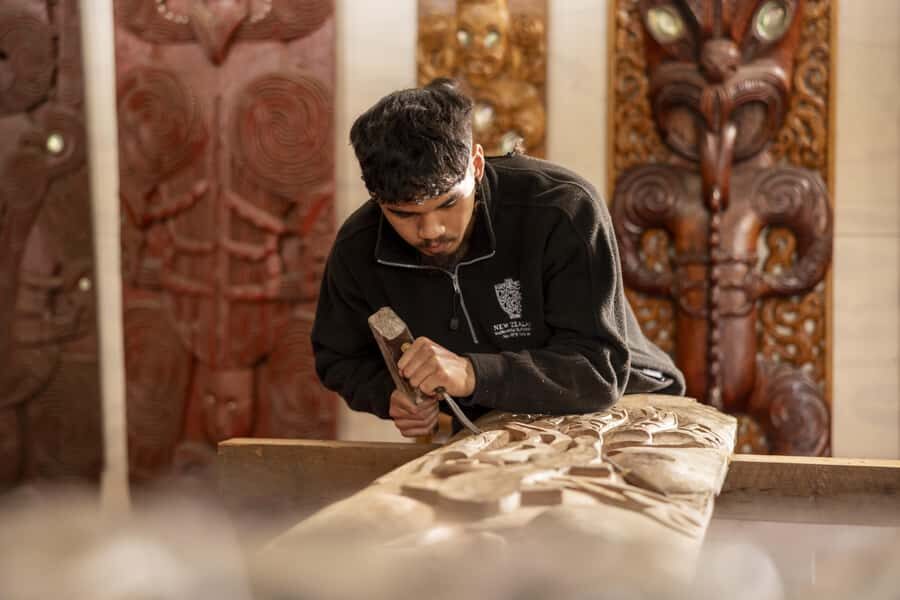
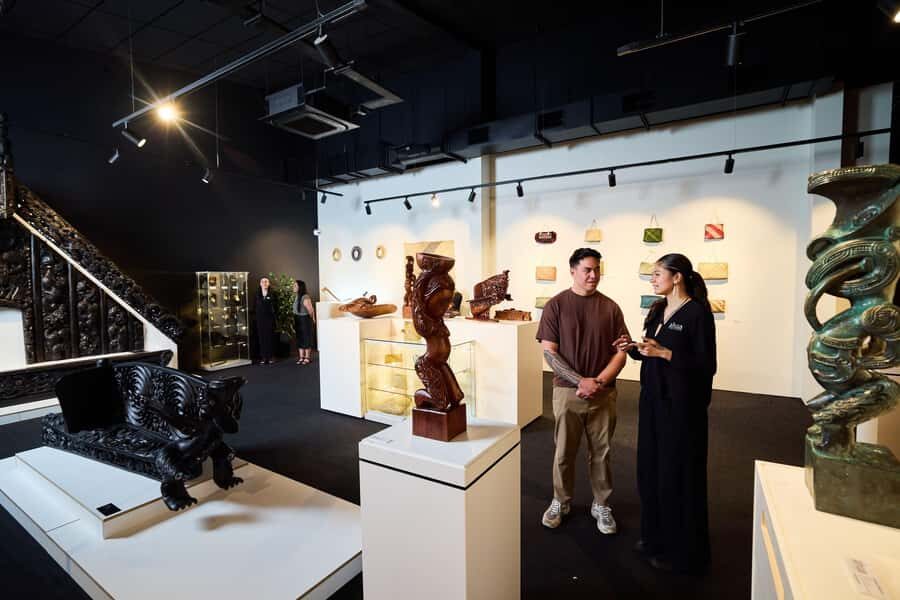
After the geothermal sights, the tour shifts into Māori arts—specifically at the New Zealand Māori Arts and Crafts Institute and the Āhua Gallery. This is where the experience stops being just spectacle and starts becoming education you can actually see with your eyes.
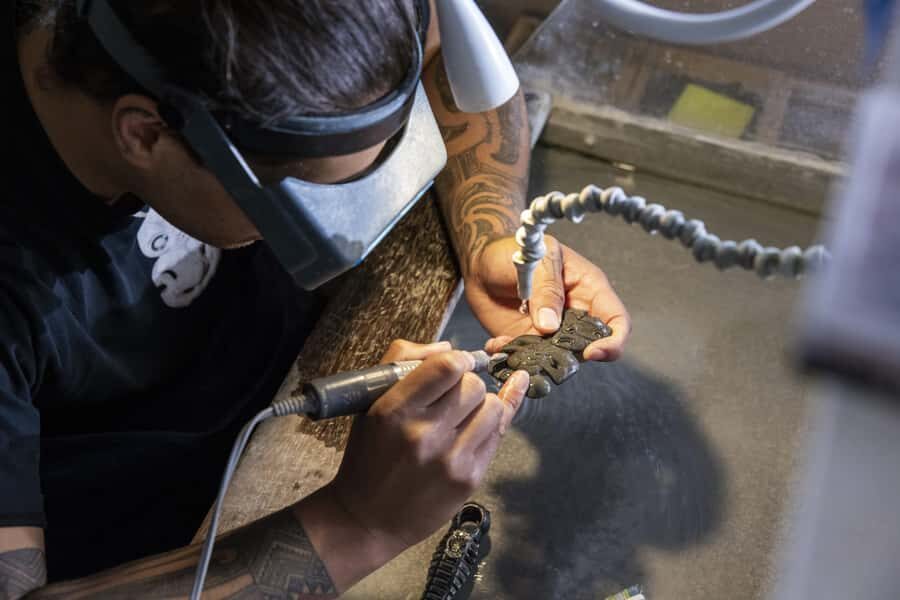
Here’s what makes it meaningful: the institute is tied to a teaching environment, where students work on traditional skills. The tour description highlights learning in weaving and wood, stone, and bone carving. In other words, you’re not only admiring finished pieces. You’re watching practiced technique—where tools, materials, and cultural meaning connect.
Why this arts stop feels more real than a quick craft shop
A craft shop is passive. You buy. You leave.
A working arts institute is active. People are making. People are learning. You can see the discipline and the care.
That difference is the whole value. You’ll usually leave with a better sense of why the art looks the way it does—because it comes from teaching, not mass production.
Time trade-off
This is one of the places where a short tour can feel a bit tight. Some people want longer to walk slowly through displays and take photos without moving on. You can still access the site afterward on your own, but during the guided portion, the pacing stays brisk. If you’re an arts-first person, plan to do extra browsing right after the tour ends.
Kiwi Conservation Centre: a kiwi encounter without the postcard fantasy
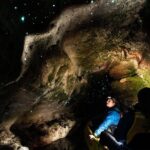
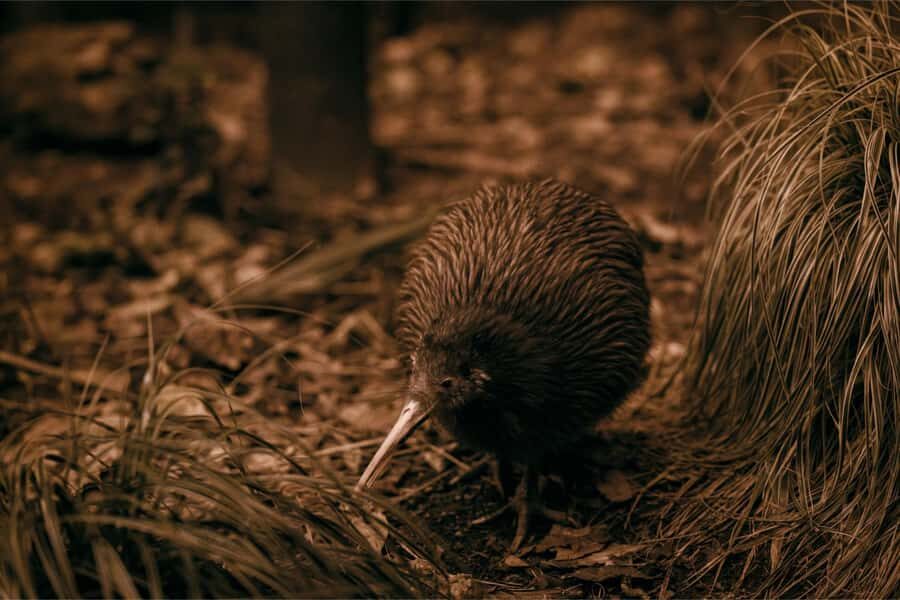
Then comes the kiwi part, and it’s the most unforgettable for many visitors. You’ll visit the Kiwi Conservation Centre and see kiwi in a specially designed nocturnal enclosure.
That “nocturnal enclosure” detail matters. You’re not just staring at a bird behind glass. The setting is made to match the kiwi’s nighttime nature as closely as they can. In practice, it means the viewing can be a bit unpredictable—kiwis aren’t robots. But it’s also what makes it feel real.
How to make your kiwi moment easier
Stay calm and focused. This isn’t a zoo-style show with guaranteed timing. If you lose track for a minute, you might miss the brief moment when one turns or moves closer to the viewing area.
Also, keep your expectations aligned with the setting. The enclosure setup is designed for kiwi behavior, not for human convenience. That’s a good thing. Just be ready for it.
The role of your kaiārahi (guide) and what good guidance changes
This tour is led by a live English guide (a kaiārahi), and that guidance is a big part of why it tends to rate so well. The strongest tours here aren’t just about facts. They’re about interpretation: why the geothermal features look the way they do, how Māori carving connects to identity and teaching, and what the kiwi program is trying to protect.
From the names that come up across groups—people like Paul, Michael, Nate, Kohu, Mita, and Makaere—you can expect a guide who treats the material as lived knowledge rather than a script.
And guidance affects practical things:
- It tells you where to stand for the best thermal views.
- It keeps you from wandering into areas that don’t give much sightline.
- It helps you connect what you see to meaning, not just trivia.
A possible issue if your group is large
One practical complaint that showed up: when a group is big, some visitors can have trouble hearing every word. If you’re near the back, pick a spot where you can see the guide’s face and don’t rely on guessing. (And if your guide has a radio/mic, even better—but you can’t count on it.)
Value math: what $59 buys you in Rotorua
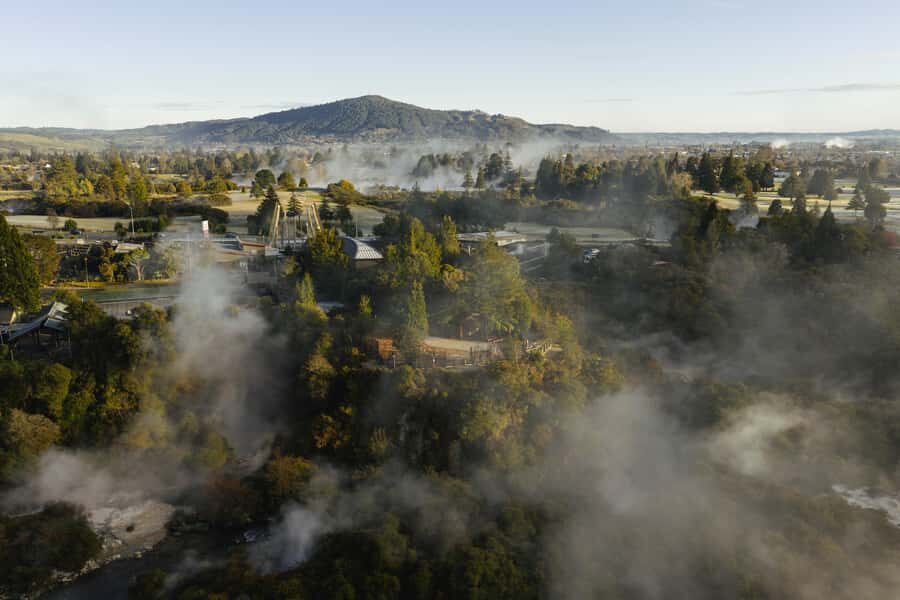
At $59 per person for 90 minutes, you’re paying for a guided route plus entry into multiple major Te Puia components. That’s a key detail: you’re not just buying a walk-around. The tour includes entry to Te Puia and covers Te Whakarewarewa Geothermal Valley, the Kiwi Conservation Centre, and the Māori Arts and Crafts Institute plus Āhua Gallery.
Here’s how I’d judge value:
- If you want geothermal + Māori arts + kiwi without assembling your own plan, it’s strong value.
- If you’re the type who can happily spend hours wandering on your own, you might prefer a self-paced visit to stretch time where you care most.
Also, you’re not paying for hotel pickup. Since that’s not included, you’ll get value if you’re already near Te Puia or can reach it easily. If you have to arrange a longer taxi trip, the overall cost to you goes up slightly.
What’s included (and what you’ll need to sort yourself)
Included:
- Entry to Te Puia
- Guided tour
- Te Whakarewarewa Geothermal Valley
- Kiwi Conservation Centre
- New Zealand Māori Arts and Crafts Institute and Āhua Gallery
Not included:
- Food and drinks
- Hotel pickup and drop-off
So plan on handling your own snacks. If you’ll arrive hungry, build in time before or after your tour to grab something nearby (the guide can often suggest practical options, but you’ll want to ask on-site).
Comfort and weather: how to not let Rotorua steam ruin your day
Te Puia is active geothermal ground. Rotorua is also known for sudden weather shifts. Even on an okay day, you’ll be out and moving.
I suggest:
- Wear comfortable, closed-toe shoes with grip. The ground near geothermal areas can be slick.
- Bring a light layer. Steam and temperature swings are real.
- If rain is in the forecast, consider a small umbrella or rain jacket. One person wished there was an umbrella option, so don’t assume anything will be provided.
If conditions are cold and wet, you might still see eruptions, but the steam plume can look different. Your best move is to follow the guide’s stand points and focus on the main action rather than expecting perfectly clear water arcs every time.
Who should book Te Rā, and who should think twice
This tour is a great fit if you:
- Want the top sights at Te Puia without building your own route
- Like a mix of science-ish geothermal features and living culture
- Appreciate a short, structured visit with time to explore on your own afterward
It’s also a good match for people who learn best by moving. Geothermal and arts are both things you understand faster when you’re walking through them with someone guiding the story.
Two cautions to consider:
- It may feel rushed if you’re the type who wants a long sit-down at every stop.
- The accessibility details are a little mixed in the information you’re given: it’s listed as wheelchair accessible, yet it’s also marked not suitable for people with mobility impairments. If mobility is a concern, check directly before booking so you know what the route will require.
Should you book Te Puia Te Rā guided day tour?
If you’re short on time in Rotorua, this is the kind of booking that makes your day simpler. You get geothermal wonder, Māori arts education, and a kiwi encounter, all wrapped into a 90-minute guided loop with entry included. For most people, that’s the sweet spot between seeing everything and spending the whole day in transit.
Book it if you want a clear plan, a guide to help you see the right things at the right angles, and a tidy schedule that doesn’t eat your afternoon. I’d skip or at least reconsider if you’re an ultra-slow explorer, since the tour’s compact nature can limit how long you linger at each stop.
One last practical note: with the reserve-now options and free cancellation mentioned for up to 24 hours in advance, you can usually take a measured risk. If your weather or timing shifts, you still have room to adjust.
FAQ
How long is the Te Puia Te Rā guided day tour?
The tour lasts 90 minutes.
Where is the meeting point, and when should I arrive?
The meeting point is Te Puia in Rotorua, New Zealand. Plan to arrive 15 minutes before the scheduled departure time.
What’s included in the tour price?
It includes entry to Te Puia, a guided tour, Te Whakarewarewa Geothermal Valley, the Kiwi Conservation Centre, and the New Zealand Māori Arts and Crafts Institute and Āhua Gallery.
Is food and drinks included?
No. Food and drinks aren’t included, and you’ll also need to arrange your own hotel pickup and drop-off.
Is this tour wheelchair accessible?
The information provided says wheelchair accessible, but it also lists that it is not suitable for people with mobility impairments. If you have mobility needs, it’s worth checking with the operator before you book.
What should I bring for the tour?
Bring comfortable shoes.