REVIEW · ROTORUA
Whaka Geothermal Trails Self-Guided Tour
Book on Viator →Operated by Whakarewarewa, The Living Maori Village · Bookable on Viator
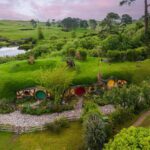
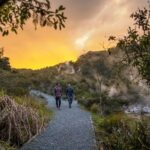
Geothermal steam and easy walking in one place. At Whakarewarewa in Rotorua, this self-guided route leads you through native forest toward colorful steaming lakes and thermal pools, with plenty of photo stops along the way. I like that it stays simple: you enter at your pace, follow the well-marked paths, and let the geothermal scenery do the talking.
What I also like is how much you can see in a short window. The walk typically runs 30 to 60 minutes, and it’s designed for people with low levels of fitness, which means you can still enjoy the rest of your day. The main thing to watch is timing and conditions: the scheduled time is your last entry cutoff, and Rotorua weather matters—come prepared with closed-toe shoes (not open toes) and sun protection.
In This Review
- Key highlights to plan for
- Why Whakarewarewa’s geothermal trails are such a good fit
- Getting in: last entry cutoffs and the smartest way to time it
- What you’ll actually do on the self-guided route
- Stop 1: Whakarewarewa’s geothermal views you can’t really fake
- The native forest walk and the edible plant angle
- Trail time: 30–60 minutes and how to not rush it
- Gear and photo tips for steam, sun, and hot ground
- Price and value: $25.97 isn’t just a ticket price
- Group size and timing: what a max of 30 means for your walk
- Weather reality in Rotorua and what to do with it
- Should you book the Whaka Geothermal Trails?
- FAQ
- How long does the Whaka Geothermal Trails self-guided walk take?
- Is the trail suitable for people with low fitness levels?
- What is included in the ticket price?
- What time can I enter if my tour lists 3:15 pm?
- How many people are in the group?
- What is the cancellation policy?
Key highlights to plan for
- Self-guided, well-marked trails that keep you moving without rushing
- 30–60 minutes of walking that suits low fitness levels
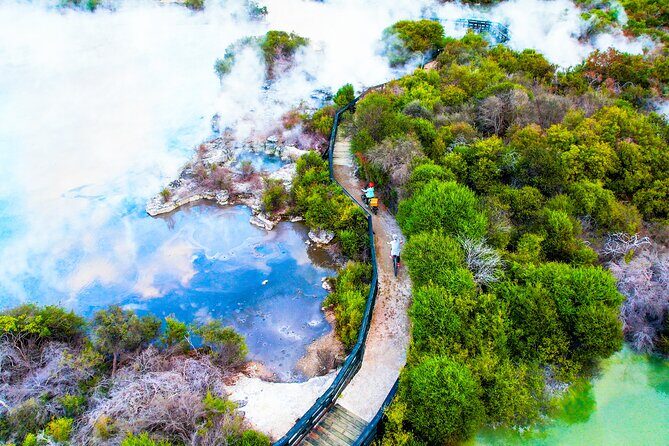
- Strong photo opportunities, especially around steaming lakes, pools, and geyser views
- Native forest + edible plant clues as you pass through the grounds
- Last-entry timing matters if you’re coming later in the day
Why Whakarewarewa’s geothermal trails are such a good fit
If you want Rotorua geothermal without committing to a long day, this works. The Whaka Geothermal Trails are built around short, clear walking routes inside Whakarewarewa, the living Maori village setting. You’re not stuck waiting around for a group. You can go at your rhythm, stop for photos, and read what you want as you pass through.
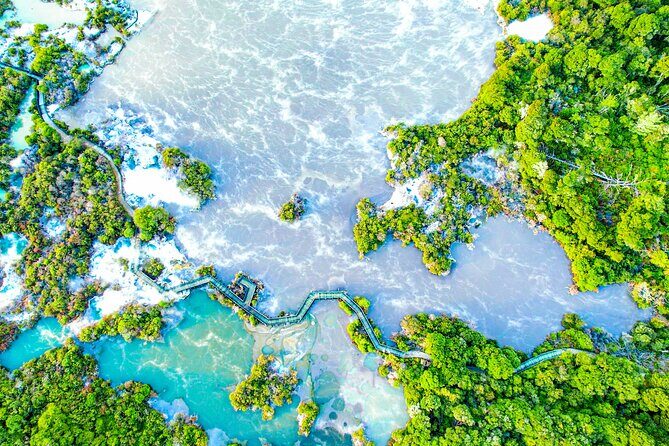
The big win is the blend: you get geothermal action (steam, hot pools, and those eye-catching water colors) and also the sense of being in a real native setting under tree cover. That matters because it keeps the experience from feeling like a single long viewing platform. Even at a small scale, the trail changes as you walk.
One more practical point: this is priced like an add-on activity. At $25.97 per person for a self-guided ticket, you’re paying for access and time in the area rather than paying for a full guided experience. For many people, that’s exactly the right value in Rotorua—especially if you already plan to do other attractions that day.
You can also read our reviews of more guided tours in Rotorua
Getting in: last entry cutoffs and the smartest way to time it
Your tour is listed with a 3:15 pm start time, but here’s the key detail: the “times set” are last entry times. In plain terms, you don’t need to sprint to the first minute. You can enter any time from 9:00 am to 4:00 pm, but if you arrive after the cutoff on your ticket, you may miss your planned entry window.
So how do you use that? I’d treat it like a flexible slot. If you’re doing morning activities in Rotorua, you can come later and still get the geothermal walk in. If you’re waiting for weather to look better, you also have that option—though note that the experience requires good weather.
The meeting point and redemption location is straightforward: 17 Tryon Street, Whakarewarewa, Rotorua 3010. The activity ends back at the same point. That loop setup helps you plan the rest of your day because you’re not figuring out a new pickup location afterward.
What you’ll actually do on the self-guided route
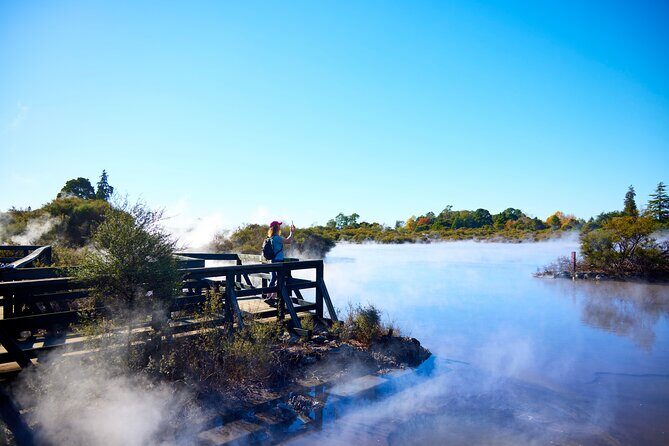
This is a self-guided experience. That sounds obvious, but it’s worth saying plainly: there’s no itinerary of multiple stops where you hop between buildings every few minutes. Instead, it’s one trail experience that you navigate yourself, using the marked paths on-site.
You’ll enter the Whakarewarewa grounds and then follow the trail system through the geothermal area. Expect a mix of:
- steaming geothermal features you can view from safe trail points
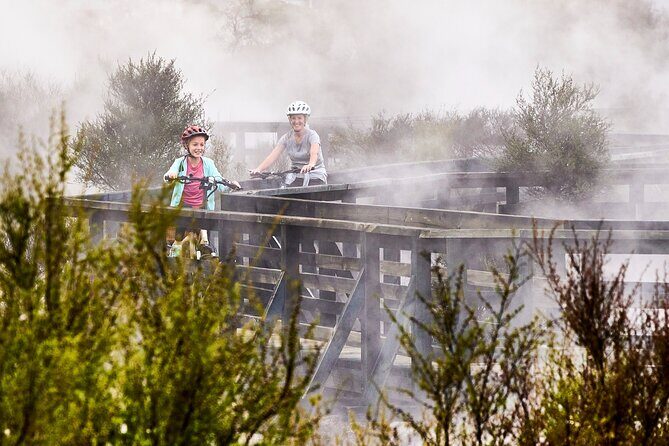
- photo spots where the steam and colored water really pop
- short stretches under tree cover, giving you breaks from the open air
- points where you can pause and read signage (helpful if you like context, not just scenery)
The walk length is about 30 to 60 minutes. That range is useful. If you’re a quick walker and you only stop for the best photos, you’ll likely be closer to the shorter end. If you’re reading signs and stopping frequently, give yourself more time.
Also, the reserve is described as an ongoing development. That’s good news for repeat visits, and it also hints that the layout and access may change over time as new areas open.
Stop 1: Whakarewarewa’s geothermal views you can’t really fake
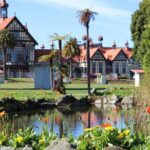
Everything centers on Whakarewarewa, often described as the living Maori village site in Rotorua. For this experience, it’s the gateway to the geothermal trails—so when people talk about the “best parts,” they’re usually pointing to what you see once you’re inside.
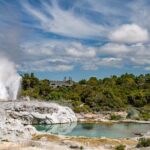
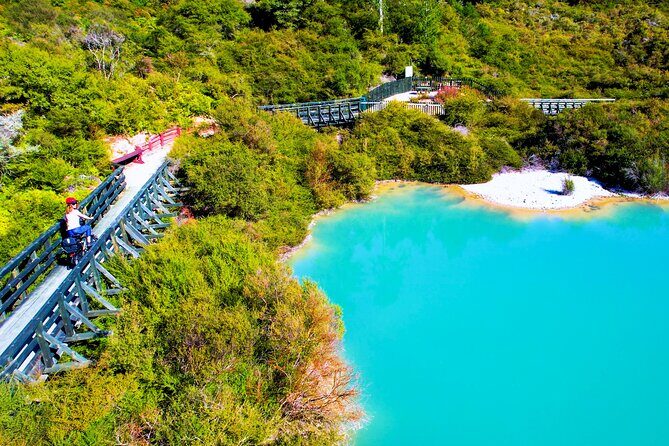
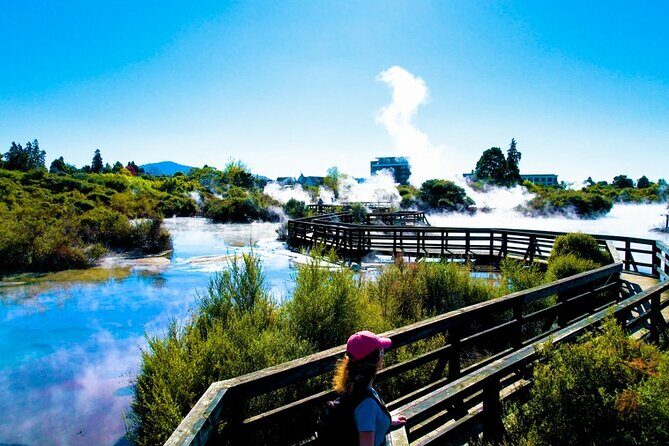
The trail through Whakarewarewa includes glimpses of the geothermal features such as:
- colorful steaming lakes
- thermal pools
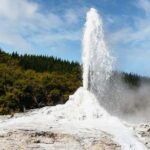
- and (toward the end for some walkers) a geyser view
One of the most practical benefits is that many of the thermal features are viewable from within the grounds. You’re not just looking at steam in the distance. You’re following a route designed for visitor access.
What makes this stop feel worthwhile even if you’ve seen geothermal before is the pacing. You walk, you get periodic views, then the steam features get more obvious as you move along. It prevents the experience from becoming one long, repetitive look.
If you care about photos for social media, this is where you’ll feel it. Steam plus colored water gives strong contrast. Native forest adds shade and depth. And because it’s a trail, you can angle your photos without feeling like you’re stuck in one spot.
The native forest walk and the edible plant angle
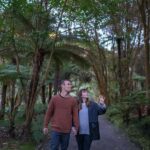
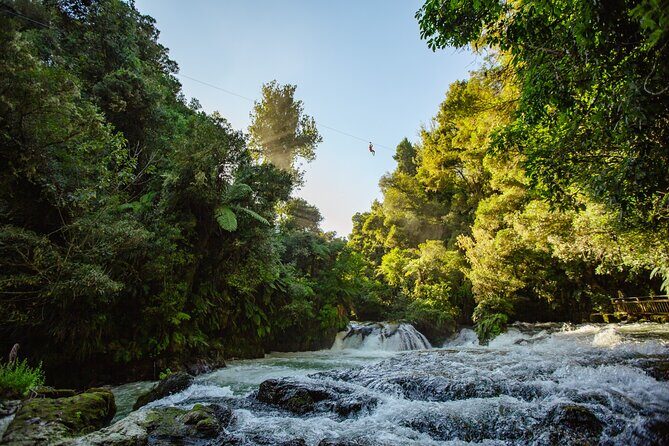
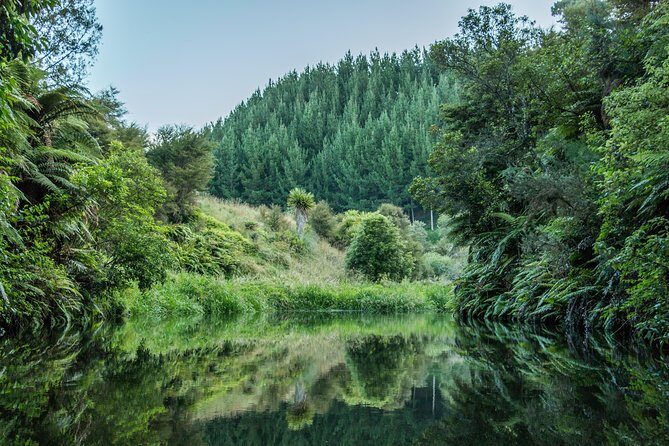
Rotorua geothermal can be intense—steam, heat, and that strong sulfur smell. What I like about these trails is the walk-through balance. You spend time in areas with native ferns and tree cover, plus signage that points out edible plants along the way.
That edible plant component is easy to overlook if you only care about the hot water. But it’s a thoughtful add-on because it gives you a cultural and ecological layer to what you’re seeing. Instead of only asking what causes the steam, you also get hints about what grows here and how people might use plants.
Even if you’re not the type to read every sign, this part tends to slow you down—in a good way. It turns the walk into something more than a checklist.
A few more Rotorua tours and experiences worth a look

Trail time: 30–60 minutes and how to not rush it
30 to 60 minutes is short, but it’s enough time to do this properly. Here’s how to think about it.
If you’re traveling with kids, older relatives, or anyone who prefers not to do long walks, the shorter duration is a big advantage. The experience is described as suitable for low levels of fitness, so it’s not the kind of strenuous hike where you regret everything midway through.
If you’re moving fast, you might still leave with solid photos. The trail has multiple viewing moments, not one single climax view. So even if you don’t linger at every point, you’re likely to catch key geothermal features.
If you’re a careful walker or you stop often, don’t feel bad about taking longer. There’s a specific value in giving the steam time to build in your mind. Sometimes the best visuals come from how the steam rolls across the path and changes with wind and time of day.
For most people, the real win is what happens after. Because this doesn’t eat your whole day, you truly have plenty of time left for other Rotorua activities. That matters in a place where choices are plentiful and schedules can get messy.
Gear and photo tips for steam, sun, and hot ground
This is the part where Rotorua can surprise you. Even on a short walk, you’re dealing with heat, steam, and surfaces that don’t always look friendly for bare feet or flimsy sandals.
Here’s solid advice drawn from what people recommend:
- Wear good shoes. Closed-toe is the safe bet, since open toes aren’t a great idea around geothermal areas.
- Bring sunscreen and a hat. Tree cover helps, but you’ll still catch sun at times.
- Use a camera setting that handles bright steam. Steam can blow out highlights, so try tapping to focus on features near the colored water and pools.
Also, pay attention to how you carry your day. If you’re doing the trails near the afternoon, you may want a small water bottle. The tour data doesn’t list what’s provided, so plan like you’re on your own and keep it simple.
Price and value: $25.97 isn’t just a ticket price
At $25.97 per person, you’re paying for access and self-guided time in a geothermal reserve setting. The value isn’t only the entry fee—it’s the fact that the route is short enough to fit into almost any itinerary without burning a half day.
This is the kind of activity that works well when:
- you want a low-effort add-on
- you already plan to do other Rotorua experiences
- you travel with someone who can’t handle longer hikes
- you’re after good photos without signing up for a full tour package
Where it might feel less valuable is if you’re expecting a high-touch guided interpretation throughout the walk. This is self-guided. You’ll get signage, and you might cross paths with village staff, but the core experience is your own navigation.
One more value note: the site is described as an ongoing reserve development. That means you’re not just stepping into a static museum. You’re visiting an evolving space, and new areas may open over time.
Group size and timing: what a max of 30 means for your walk
The tour listing caps the group at 30 travelers. With a self-guided format, that cap still matters. Fewer people usually means less congestion at the best viewing points. Steam trails can get busy in peak hours, and your photo chances improve when paths aren’t packed.
Since you can enter between 9:00 am and 4:00 pm, you can also choose your timing. If you want calmer viewing, arriving earlier in the day typically helps in most attractions like this—even if the listing doesn’t promise quiet times, it gives you control.
The self-guided nature plus the modest group cap means you’re not forced into long waits. You can keep moving and return to your preferred spots without coordinating with others.
Weather reality in Rotorua and what to do with it
Rotorua geothermal is fun in any season, but weather controls comfort here. The experience requires good weather, and if it’s canceled due to poor weather, you’ll be offered a different date or a full refund.
Practically, that means:
- if rain is light, you might still be fine, but expect slippery conditions
- if conditions look bad, be ready with a backup plan since cancellations can happen
- if you’re traveling with limited days, consider booking when you have flexibility to reschedule
Even if the weather holds, remember the steam itself can make paths feel hotter or more humid. Give yourself the simple basics: shoes, sun protection, and time.
Should you book the Whaka Geothermal Trails?
I think you should book this if you want a short, well-paced way to see Rotorua geothermal at Whakarewarewa—especially if you like photography, appreciate native forest scenery, and don’t want a long commitment.
Skip it (or pair it with a different format) if you’re only interested in a fully guided deep explanation the whole way through. This is access plus trails, not a lecture tour.
My best-fit advice: book it when you want an afternoon-friendly activity that won’t mess up your other plans, and when you can follow the trail with good shoes and a little patience for steam and sun.
If you’re after a simple win—geothermal views, native setting, and photo moments within an hour—this is a solid bet.
FAQ
How long does the Whaka Geothermal Trails self-guided walk take?
The walks range from about 30 minutes to 1 hour.
Is the trail suitable for people with low fitness levels?
Yes. It’s described as suitable for those with low levels of fitness.
What is included in the ticket price?
The ticket includes admission to Whakarewarewa – The Living Maori Village.
What time can I enter if my tour lists 3:15 pm?
The times listed are last entry times. You may enter anytime from 9:00 am through to 4:00 pm.
How many people are in the group?
The experience has a maximum of 30 travelers.
What is the cancellation policy?
You can cancel for free up to 24 hours in advance for a full refund. If you cancel less than 24 hours before the experience start time, the amount paid is not refunded. The local weather matters too—if it’s canceled due to poor weather, you’ll be offered a different date or a full refund.